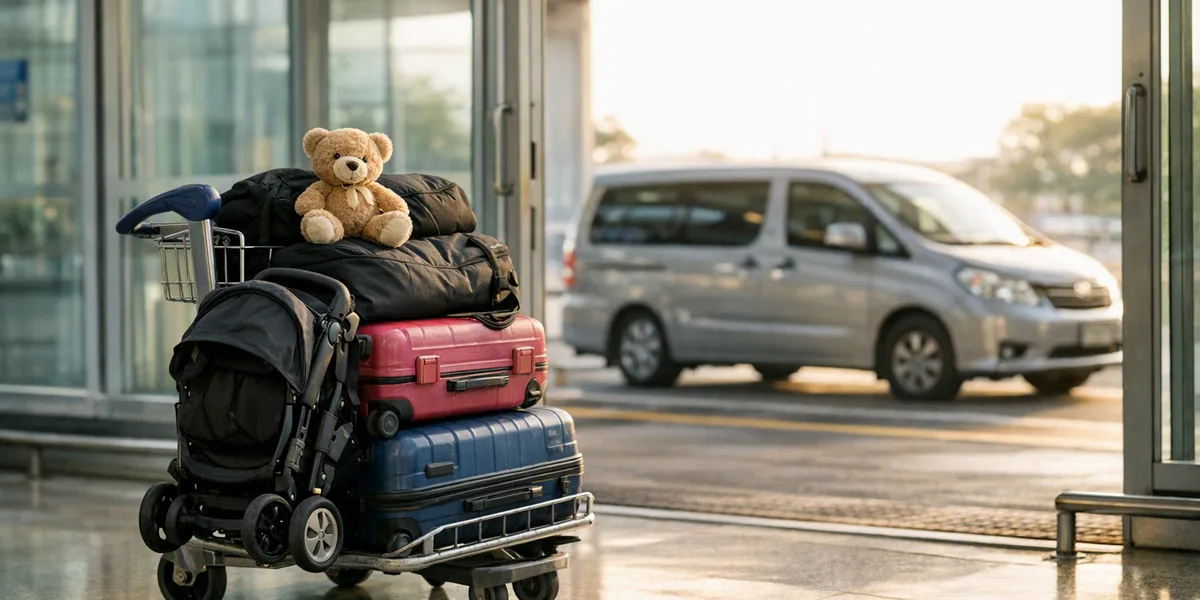
Traveling through Asian airports with children means navigating unfamiliar car seat regulations, stroller policies, and transfer logistics that vary wildly by country. Thailand doesn't legally require car seats for taxis, while Singapore enforces strict child restraint laws with SGD 120 fines. Japan's ride apps offer child seats through advance booking, but Bali's Grab drivers rarely have them available. Understanding which airports have family lanes, how to pre-book appropriate vehicles, and where regulations actually get enforced can transform a stressful arrival into a smooth ride to your hotel.
Singapore stands out with mandatory car seat enforcement for children under 1.35m tall, applying to all vehicles including taxis and private hires since 2019. Fines reach SGD 120 per unrestrained child, and Changi Airport (SIN) immigration actively reminds arriving families. Japan requires child seats for children under 6 years old, though taxi exemptions exist-Tokyo's licensed taxis aren't legally required to have them, but apps like GO and JapanTaxi let you request vehicles equipped with seats for JPY 500-800 extra.
Thailand has car seat laws on paper but zero enforcement for taxis departing Suvarnabhumi (BKK) or Don Mueang-most Grab and Bolt drivers won't have seats even if requested. Indonesia similarly lacks enforcement at Ngurah Rai Airport (DPS) in Bali, where bringing your own travel car seat becomes essential. Dubai requires car seats for children under 4 years old with AED 400 fines, though enforcement at DXB airport varies.
South Korea mandated child seats in 2018 for kids under 6, but Seoul's Incheon Airport (ICN) taxi drivers rarely stock them-advance booking through KakaoT with specific requests is necessary.
Klook and GetYourGuide offer pre-bookable airport transfers with guaranteed car seats for Singapore, Tokyo, and Seoul, typically costing 15-25% more than standard rides. For Changi Airport, book through Ryde or ComfortDelGro's app at least 24 hours ahead, selecting 'Child Seat' or 'Booster Seat' options-infant seats (0-13kg), convertible seats (9-18kg), and boosters (15-36kg) are available. Tokyo Narita (NRT) transfer companies like NRT Shuttle and Keisei Skyliner partner services offer car seat add-ons for JPY 1,500-2,000, bookable through their English websites.
Bangkok families should book through Klook's private van services rather than standard Grab-vans departing BKK with car seats cost THB 1,200-1,800 versus THB 400-600 for regular sedans without. Bali's situation requires emailing transfer companies directly (Bali Golden Tour, Bali Sun Tours) requesting specific seat types, as DPS airport transfers rarely include them automatically. Dubai airport transfer services through Careem Premium or private operators like Blacklane guarantee child seats when selected during booking, adding AED 50-80 to typical AED 150-200 rides to Dubai Marina or Downtown.
Lightweight travel car seats like the Wayb Pico (9 pounds) and Cosco Scenera NEXT (10 pounds) fit in checked luggage or strap to carry-on bags, solving the availability problem across Asia. These FAA-approved seats work for ages 1-4 and cost USD 50-120, paying for themselves after 2-3 transfers where local seats would cost extra or prove unavailable. Airlines flying into Bali, Bangkok, and other Southeast Asian hubs allow one car seat to check free as baby equipment-confirm with your carrier before Ngurah Rai or Suvarnabhumi arrivals.
The CARES harness (1 pound, USD 75) works for children 22-44 pounds on airplane seats but doesn't help in ground vehicles, so pair it with a Bubble Bum inflatable booster (2 pounds) for taxi use. Installation takes practice: many Asian taxi drivers won't assist and may view your seat skeptically, so YouTube your specific seat's belt installation before your trip. At Tokyo Narita, customs officials rarely question travel seats in luggage, while Singapore Changi staff may inspect to verify legitimate child safety equipment rather than commercial goods.
Singapore Changi lets families use strollers all the way to aircraft doors on jetbridges, with staff tagging them for plane-side return on arrival-one of Asia's most family-friendly policies. Bangkok Suvarnabhumi requires stroller gate-check at boarding, though families can request airport-provided umbrella strollers from information desks near immigration for terminal navigation. Tokyo Narita offers free rental strollers in both terminals after customs, located near arrival lobby tourist information counters-these basic models work fine for terminal-to-bus or terminal-to-train movement.
Bali Ngurah Rai has no loaner strollers, and the compact international terminal means most families simply carry young children through immigration and customs. Dubai DXB provides complimentary stroller service through 'Marhaba' lounges, but standard arrivals must carry or bring their own-the massive Terminal 3 makes strollers essential for connections. Lightweight umbrella strollers (Summer Infant 3Dlite at 13 pounds) work better than full travel systems for Asian airports, fitting easily in overhead bins and surviving rough baggage handling.
Most Asian airlines (Singapore, ANA, Thai) let you gate-check strollers for free regardless of baggage allowance, though budget carriers like AirAsia and Scoot may charge USD 15-30 if not pre-declared.
Grab's 'GrabFamily' feature in Singapore, Malaysia, and Philippines lets you specifically request drivers who've completed child safety training and have verified car seat installations, though availability remains limited to about 15% of drivers. Gojek in Indonesia added 'GoCar Seat' options in Jakarta and Surabaya but not yet Bali, where DPS airport pickups still require manual driver communication through chat. Tokyo's GO app (merger of JapanTaxi and MOV) includes 'With Child Seat' checkbox during booking, dispatching equipped taxis for JPY 500-800 premium on typical JPY 3,500-4,500 Narita-to-Tokyo rides.
Singapore's Ryde app offers cheaper alternatives to Grab with same car seat booking, charging SGD 35-42 for Changi to downtown versus Grab's SGD 40-48. Seoul's KakaoT requires Korean phone verification but accepts international cards-select 'child seat' in vehicle options, though only 'Kakao Black' premium tier guarantees availability. Dubai's Careem has 'Careem Kids' in select areas with car seats, but DXB airport pickups work better through pre-booked Blacklane or Kiwitaxi services that guarantee equipment.
All these apps let you specify infant versus toddler versus booster seats, though driver compliance varies-screenshot your booking confirmation showing seat request.
Asian families typically travel with more luggage than Westerners expect-request SUVs or vans through ride apps when traveling with 2+ kids plus standard baggage. Singapore Changi's MRT station has elevators throughout, making train-to-hotel feasible with strollers and 2 bags, while Bangkok's BKK Airport Rail Link lacks elevators at several stations (Phaya Thai, Ratchaprarop), forcing families toward taxis. Tokyo Narita's Keisei Skyliner allows 2 standard suitcases per passenger but struggles with strollers in baggage racks-families with children under 4 find private transfers more practical despite JPY 20,000-25,000 costs versus JPY 2,520 train tickets.
Bali's DPS airport taxi queue moves slowly with families, so pre-arranged pickups with drivers meeting you at arrivals (holding name signs) save 20-30 minutes versus queueing with tired children. Dubai DXB's metro connects to terminals but requires navigating stairs at several stations-families staying at JBR or Marina areas should book direct transfers for AED 150-180 rather than wrestling luggage and strollers through train changes. Pack a small backpack as your 'transfer bag' with diapers, wipes, snacks, and tablet-keeping this separate from checked luggage means you're not digging through suitcases in taxi queues while children melt down.
Japanese taxi drivers rarely speak English but appreciate polite communication-learn 'chotto yukkuri' (please drive slowly) for nervous parents at Tokyo Narita. Thai drivers at Bangkok Suvarnabhumi often don't understand car seat requests even when booked through apps, so having photos of your child's age and Thai text explaining 'thee nang dek' (child seat) helps clarify. Singapore drivers are generally fluent in English and familiar with car seat regulations given enforcement, making Changi the easiest Asian airport for direct communication about child safety.
Indonesian drivers in Bali view car seats as unusual foreign requests-frame it as 'untuk keselamatan anak' (for child safety) rather than demanding, as cultural norms around child restraints differ from Western expectations. Dubai's drivers come from dozens of nationalities, so simple English works, though Arabic speakers appreciate 'kursi atfal' (child seat) phrases. Tipping isn't expected in Japan or Singapore for standard service, but Thailand and Bali drivers appreciate THB 20-40 or IDR 20,000-50,000 when they've helped with luggage and child equipment.
Many Asian cultures view young children as community responsibility-drivers often offer candy or try to hold babies, which may feel intrusive to Western parents but comes from genuine warmth.
Singapore's Changi Airport bus services (36, 36A) cost SGD 2.50 versus SGD 40+ taxis, with storage for strollers and running every 10-15 minutes to Orchard Road and downtown-doable with one child but challenging with multiple kids. Bangkok's BKK Airport has family-friendly shuttle vans through hotels, often free or THB 200-300 per person-Marriott, Hilton, and Centara properties offer these, bookable through hotel websites pre-arrival. Tokyo Narita's shared shuttle services like Airport Limousine Bus provide more luggage space than trains for JPY 3,200 per adult (children under 6 free), though travel time reaches 90-120 minutes versus 60 minutes by Skyliner.
Bali has no public airport buses, making DPS transfers inherently taxi or pre-booked van only-but private vans for 4-6 people cost only IDR 200,000-300,000, barely more than metered taxis. Dubai Metro works for Marina/JBR destinations if children are over 5 and you're comfortable with escalators and crowds-AED 8.50 per adult versus AED 150+ taxis saves significantly for budget-conscious families. Some hotels near Asian airports (Novotel Bangkok Airport, Crowne Plaza Changi) offer free shuttle services including child seats when pre-requested through reservations-worth confirming during booking for late-night arrivals when ride availability drops.
When your pre-booked car seat transfer doesn't show at Bangkok Suvarnabhumi, taxi.asia's partner network can arrange backup rides in 15-20 minutes through local dispatchers who stock equipment. Singapore's airport taxi queue has dedicated family lanes at Changi Terminal 3 Basement 2, where staff can radio for drivers with car seats-expect 10-15 minute waits versus immediate standard taxis. Tokyo Narita's tourist information centers (Terminal 1 Central Building 1F, Terminal 2 Main Building 2F) have English-speaking staff who can call taxi companies with child seats, though costs run JPY 25,000-30,000 to central Tokyo.
Bali families arriving at DPS without arranged transfers should head to the official taxi counter (Blue Bird, Ngurah Rai Taxi) rather than negotiating with touts-explain your car seat need and they'll radio available drivers, charging standard IDR 150,000-200,000 metered rates. Dubai DXB has premium taxi lanes with family vehicles, though car seats aren't guaranteed-booking through the airport's Marhaba service (AED 250-300) includes meet-and-greet plus vehicle with requested equipment.
Keep local emergency numbers saved: Singapore's ComfortDelGro (+65 6333 1111), Bangkok's Grab support (+66 2 029 2299), Tokyo's JapanTaxi app support-speaking to humans beats app failures when traveling with exhausted children.
Every issue discussed in this guide - overcharging, scams, language barriers, unreliable apps, long queues - has one simple solution: pre-book your airport transfer before you fly. A pre-booked transfer gives you a fixed price confirmed in advance, a named driver tracking your flight and waiting at arrivals, and zero negotiation. Most vehicle classes can be cancelled free of charge up to 5 hours before pickup, so booking early costs you nothing.
Start by checking our airport guides below for specific local advice, prices and transport options at your arrival airport.
Read our detailed transfer guides for airports mentioned in this article:
Specific route guides with prices and transport comparisons: