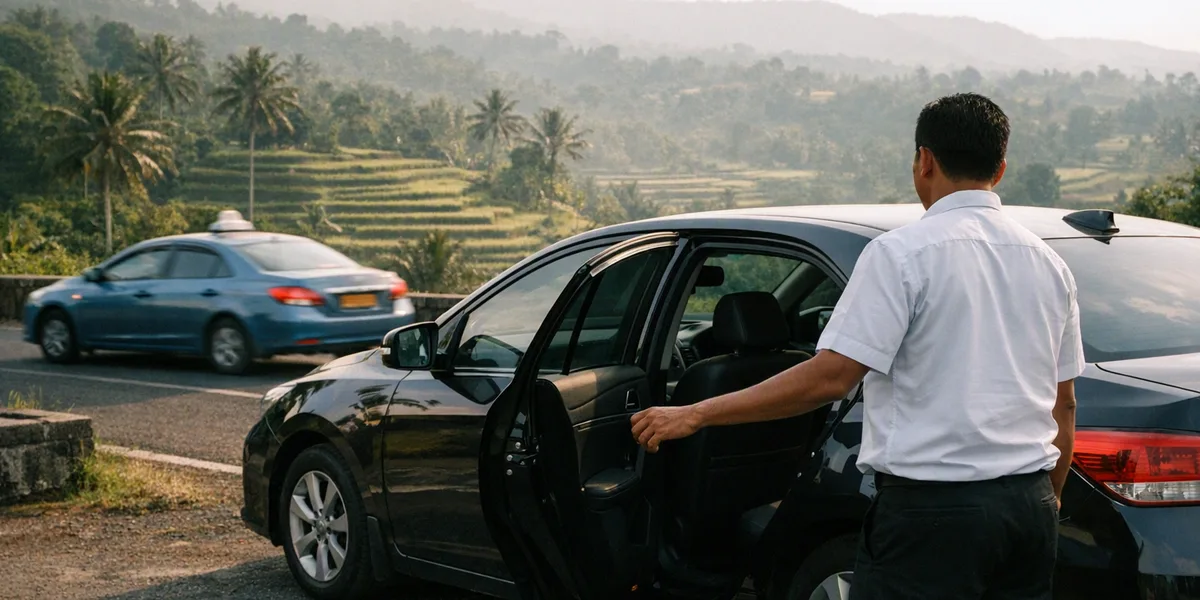
Exploring Angkor's outer temples, Bali's rice terraces, or Rajasthan's hilltop forts often means covering 80-150 kilometers with multiple stops over 8-12 hours. While metered taxis work perfectly for airport runs, full-day touring requires a different approach. The choice between hiring a private driver and stringing together individual taxi trips affects your budget, schedule flexibility, and stress levels. In Southeast Asia and India, daily driver rates typically range ₹2,500-4,500 ($30-55 USD), while per-trip taxis for the same itinerary often cost 40-70% more once you factor in waiting time and return legs. This guide breaks down the math, compares booking platforms, and identifies exactly when each option makes sense for your day trip.
Private drivers in Asia typically charge flat daily rates covering 8-10 hours and 80-120 kilometers, with overtime at ₹200-400 per hour and distance fees of ₹8-15 per extra kilometer. In Chiang Mai, a Toyota Camry with driver costs ฿1,800-2,200 ($50-61 USD) for 10 hours covering the Doi Suthep-Doi Pui loop. Bali's driver rates run Rp 600,000-750,000 ($38-47 USD) for popular circuits like Ubud-Tanah Lot-Uluwatu. Siem Reap tuk-tuk drivers charge $25-35 for the full-day grand circuit including Banteay Srei, while air-conditioned cars cost $45-65.
Jaipur's sedans start at ₹2,800 ($34 USD) for the Amber Fort-Nahargarh-Jaigarh triangle. These rates include fuel, parking, driver meals, and basic English communication. Payment happens end-of-day in cash, though apps like Klook and GetYourGuide now offer prepaid vouchers. The critical advantage: your driver waits at each stop without the meter running, eliminating the anxiety of hailing new rides in remote temple parking lots or beachside villages where taxi supply is scarce.
Booking separate taxis for multi-stop itineraries quickly becomes expensive and logistically messy. Take a typical Bali day trip: Ubud to Tegallalang Rice Terraces (13 km, Rp 150,000), wait 45 minutes, then to Tirta Empul temple (19 km, Rp 180,000), lunch break, then Gunung Kawi (8 km, Rp 120,000), and back to Ubud (21 km, Rp 200,000). You're looking at Rp 650,000 minimum ($41 USD) without accounting for driver waiting fees (typically Rp 50,000 per hour) or the difficulty finding Grab/Gojek drivers willing to wait at rural temples.
Add waiting time and you hit Rp 950,000+ versus Rp 650,000 for a private driver covering the same route. In Chiang Mai, the Sticky Waterfall-Mae Kampong-Bo Sang circuit costs ฿2,800-3,400 via separate Bolt rides versus ฿2,000 with a pre-booked driver. The math flips for single long-distance trips-Siem Reap to Beng Mealea temple (77 km one-way) costs $45-55 round-trip with dedicated driver versus $60-75 for a day-rate that includes unnecessary downtown waiting time.
Ride-hailing apps have added daily rental features: Grab Thailand offers "GrabRent" with 4-hour minimums at ฿990 and 8-hour packages at ฿1,790, bookable 2-24 hours ahead. Gojek Bali's "GoRide Sewa" starts at Rp 450,000 for 6 hours within Ubud radius, though English proficiency varies. India's Ola Outstation calculates per-kilometer rates (₹10-14) with minimum 250 km daily billing, making it viable for Jaipur-Pushkar day trips (280 km round-trip) at ₹2,800-3,920. Traditional booking comes through hotel concierges (who take 15-25% commission) or direct driver WhatsApp contact-many Siem Reap drivers list numbers on TripAdvisor and accept PayPal deposits.
Klook and Viator offer fixed-price vouchers: Chiang Mai's "Doi Inthanon Full Day with Driver" costs $42-58 depending on vehicle class, includes English-speaking guide upgrades, and provides cancellation insurance. The trade-off: app pricing is transparent but drivers may lack destination knowledge, while direct bookings offer flexibility to adjust routes but require negotiation skills and upfront trust.
Solo travelers rarely justify private drivers economically-a single-passenger Grab from Ubud to Uluwatu costs Rp 280,000 versus Rp 650,000 for a dedicated 10-hour driver you won't fully utilize. The equation changes at 3+ people: split a Jaipur day-rate (₹3,200) three ways equals ₹1,067 per person versus ₹1,800+ each for individual InDrive rides covering Amber Fort, Jal Mahal, and Hawa Mahal. Seven-seater Toyota Innovas in Chiang Mai cost ฿2,400-2,800 daily, making them cost-effective for groups of 4-6 doing the Chiang Rai-White Temple-Golden Triangle loop (340 km).
Bali's Hiace vans (12-seat) run Rp 950,000-1,200,000, sensible for 8+ people temple-hopping but overkill for couples. Tuk-tuks work differently-Siem Reap's open-air models seat 4 uncomfortably and cost $30-40 daily, suitable for dry-season temple circuits but miserable in 35°C heat. Air-con preference alone often justifies car upgrades: Angkor Wat visits between March-May see tuk-tuk passengers paying $35 then spending $15-20 extra on bottled water and café breaks to escape the heat.
Private drivers shine when you want route spontaneity. Spot a pottery village between Chiang Mai and Doi Inthanon? Your driver pulls over for 20 minutes without renegotiating fees. Rain hits Bali's Jatiluwih rice terraces at 2pm? Pivot to the covered Elephant Cave without app cancellation penalties. This flexibility costs nothing extra within your daily kilometer allowance-most Siem Reap drivers happily swap Banteay Kdei for Ta Som if you're templed-out.
Fixed-route taxis eliminate this freedom: Ola Outstation's pre-set Jaipur city tour (Amber-City Palace-Jantar Mantar) charges ₹450 extra for off-route additions like Galtaji Temple. Grab's hourly rental minimums (4-hour blocks) mean you can't easily extend a great stop by 30 minutes without booking another full block at ฿990. The downside to driver flexibility: some will suggest commission-earning stops at silk factories or spice shops. Reputable drivers from Klook or established companies like Bali's "Bali A1 Driver" avoid this, but street-hailed drivers in tourist zones commonly build in 1-2 shopping stops where they earn 10-15% kickbacks on purchases.
English proficiency varies wildly. Chiang Mai drivers booked through apps average intermediate English-enough for "stop here" and "30 minutes please" but insufficient for explaining Lanna temple architecture. Bali's established driver services like "Bali Customized Tour" provide guides with university-level English at Rp 850,000-1,000,000 daily, worth it for culture-focused travelers. Siem Reap tuk-tuk drivers speak transactional English plus French (colonial legacy) and Japanese (tourist market), though historical context requires separate guide hire at $25-35 daily.
Jaipur drivers through hotel concierges typically speak functional English and Hindi, critical for navigating Rajasthani street food stops or negotiating with Amber Fort elephant handlers. Route knowledge matters more than language: a 10-year veteran Bali driver knows which Tanah Lot viewpoint avoids crowds at sunset (southern platform, not main temple approach) and which warungs near Tegallalang have clean bathrooms (Warung Pulina, not the tourist-trap cafés).
Grab drivers assigned algorithmically may nail the GPS coordinates but miss these nuances, leading to 45-minute parking hassles at Uluwatu during peak season.
Commercial taxi insurance in Thailand, Indonesia, India, and Cambodia covers passenger injury claims up to ฿1,000,000 (Thailand), Rp 50,000,000 (Indonesia), ₹1,500,000 (India), and $50,000 (Cambodia) respectively. Grab and Gojek rides include automatic coverage visible in your trip receipt. Private drivers booked directly often carry only third-party liability insurance-adequate for fender-benders but potentially inadequate for serious medical claims. Ask to see insurance certificates before long highway trips like Jaipur-Ranthambore (180 km) or Chiang Mai-Pai (135 km).
Klook and GetYourGuide vouchers include supplemental travel insurance covering medical evacuation and trip interruption, though coverage caps at $10,000-25,000. Vehicle condition varies: Grab/Bolt enforce sub-5-year vehicle age requirements, while direct-hire drivers in Siem Reap may operate 15-year-old Camrys with 400,000+ kilometers-mechanically sound but lacking modern safety features like ESC and side airbags. Check tread depth (3mm minimum), working seatbelts in rear seats, and functional air-con before departing.
Reputable driver services maintain fleets under 3 years old and provide backup vehicles if breakdowns occur.
Certain routes heavily favor day-rate drivers. Angkor's Grand Circuit (Preah Khan, Neak Pean, Ta Som, East Mebon, Pre Rup) covers 26 kilometers with 5-7 stops over 6-8 hours-impossible to coordinate via individual taxis given limited vehicle availability at outer temples. Siem Reap tuk-tuks charge flat $25-30 and wait patiently while you explore. Bali's Nusa Penida day trips require different logic: public ferries from Sanur cost Rp 150,000 return, then island drivers charge Rp 650,000 for the Kelingking-Angel's Billabong-Broken Beach circuit.
Booking combined ferry-and-driver packages through Klook ($35-45) simplifies logistics but limits you to group schedules. Jaipur's rural fort triangle (Amber, Jaigarh, Nahargarh) sits 11-18 kilometers from central hotels-hiring a driver for ₹2,800 beats three separate Ola rides at ₹800 each plus ₹400 in waiting fees. Chiang Mai's Mae Sa Valley crafts loop (orchid farm, snake farm, butterfly park, tiger kingdom) demands 4-5 stops over 40 kilometers, territory where pre-negotiated drivers ($45-55) beat per-ride Bolt charges by 30-40%.
December-February demand in Chiang Mai and Bali inflates day-rates by 20-35%-drivers who charge ฿1,800 in May ask ฿2,400 in December. Book 7-14 days ahead during high season or accept premium walk-up rates. Siem Reap sees peak pricing November-January when tuk-tuk drivers earn $40 for routes they'd accept $28 for in rainy August. Jaipur's wedding season (October-March) creates vehicle shortages-hotels run out of driver contacts, pushing travelers toward Ola's dynamic pricing that can hit ₹5,200 for routes normally costing ₹3,000.
Apps provide price transparency: Grab shows estimated daily rental costs upfront, while direct driver negotiations create uncertainty. Counter-intuitively, shoulder season (April-May in Southeast Asia, July-September in India) offers best value-Bali drivers quote Rp 550,000 versus peak Rp 750,000, and you'll find experienced operators eager to fill calendar gaps. Low-season trade-off: fewer backup vehicles if yours breaks down, and some rural restaurants close Mondays-Wednesdays when tourist volume drops.
Every issue discussed in this guide - overcharging, scams, language barriers, unreliable apps, long queues - has one simple solution: pre-book your airport transfer before you fly. A pre-booked transfer gives you a fixed price confirmed in advance, a named driver tracking your flight and waiting at arrivals, and zero negotiation. Most vehicle classes can be cancelled free of charge up to 5 hours before pickup, so booking early costs you nothing.
Start by checking our airport guides below for specific local advice, prices and transport options at your arrival airport.
Read our detailed transfer guides for airports mentioned in this article:
Specific route guides with prices and transport comparisons: