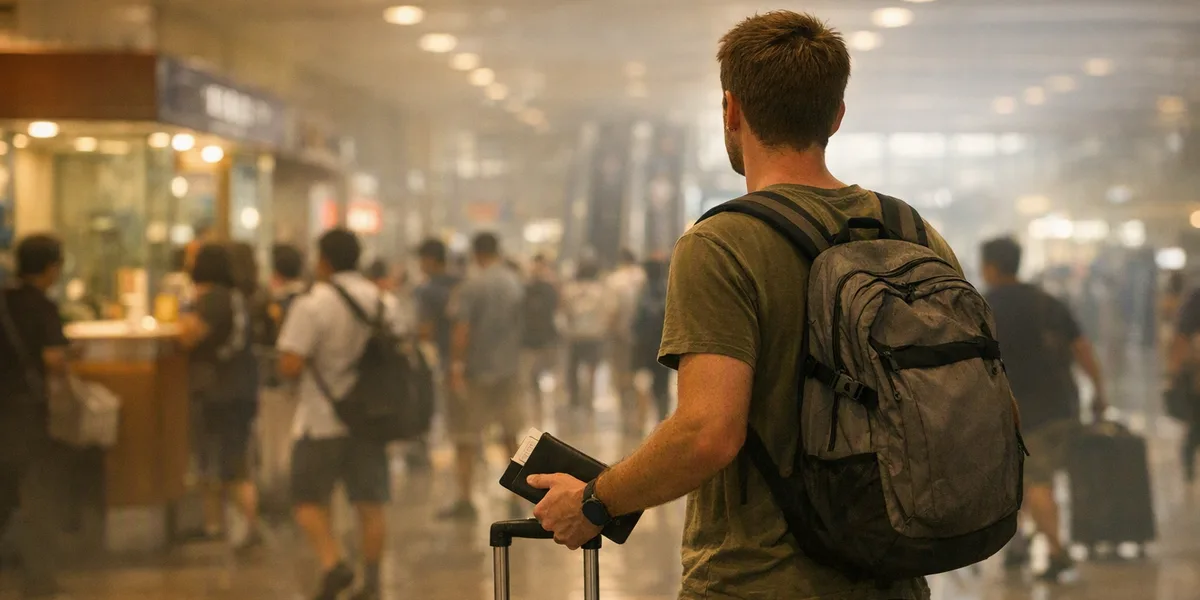
Stepping off your first flight into Bangkok Suvarnabhumi (BKK), Bali's Ngurah Rai (DPS), or Tokyo Narita (NRT) feels exhilarating and overwhelming in equal measure. The immigration queues, unfamiliar signs, currency exchange booths, and transportation touts can turn excitement into confusion fast. This guide walks you through every step from touchdown to hotel check-in, covering what actually happens at Asian airports and how to handle it smoothly. We'll cover the customs process, getting local cash and connectivity, and choosing the right transfer option-so you can focus on starting your trip instead of stressing about logistics.
After disembarking, follow signs for 'Immigration' or 'Passport Control'-you'll fill out an arrival card if you didn't complete one on the plane. Thailand requires all visitors to complete the card with your passport number, flight details, and accommodation address. Japan's card asks for your occupation and purpose of visit. Indonesia stamps your passport without much paperwork for most nationals. Typical immigration wait times: 20-45 minutes at BKK during peak hours (17:00-21:00), 15-30 minutes at DPS, and surprisingly quick 10-20 minutes at NRT despite the crowds thanks to efficient processing.
Have your return ticket details ready-some countries legally require proof of onward travel, though it's rarely checked. After immigration, collect your luggage and proceed to customs. The green 'Nothing to Declare' channel works for most tourists carrying standard items. Thailand limits duty-free to 200 cigarettes and 1 liter of alcohol. Dubai (DXB) is strict on medications-carry prescriptions for anything beyond basic pain relievers. Bali customs officers occasionally check bags but rarely detain tourists with normal vacation items.
Airport exchange booths display flashy signs but deliver terrible rates-typically 8-12% worse than you'll get from ATMs. At Suvarnabhumi, the SuperRich booth on the basement level (near the Airport Rail Link) offers Bangkok's best airport rates, only 2-3% below mid-market. Otherwise, head straight to ATMs after clearing customs. Withdraw enough for 2-3 days to minimize fees: ฿5,000-8,000 in Thailand ($140-230 USD), ¥30,000-50,000 in Japan ($200-330), or Rp 3,000,000-5,000,000 in Indonesia ($190-310).
Your home bank charges foreign transaction fees (typically 1-3%), but the real sting comes from local ATM fees: ฿220 per withdrawal in Thailand, Rp 50,000 in Bali, ¥330 in Japan. Major international airports have multiple ATM clusters-look near the arrivals hall exits. Avoid 'dynamic currency conversion' when prompted-always choose to be charged in local currency, not your home currency. This scheme adds 5-8% to your costs. Keep ฿100-500 in small bills handy for taxis or buses that might not have change for large notes.
Airport SIM card counters appear immediately after customs-resist the urge to skip them. Local SIM cards cost $8-25 for tourist packages with 20-50GB data and work far better than international roaming plans that charge $10-15 per day. At BKK, AIS and True Move counters sit near exits 3-4 in the arrivals hall. Staff speak English, install the SIM, and verify it works before you leave-total time 5-10 minutes.
Thailand's tourist SIM packages include unlimited 4G/5G data for 15-30 days at ฿299-699 ($8-20). In Bali, Telkomsel's 'Kombo Sakti' offers 60GB for Rp 150,000 ($9). Japan's airport SIM situation runs pricier: expect ¥2,000-4,500 ($13-30) for 7-15 days at NRT from providers like Sakura Mobile or IIJmio. Bring your passport for registration-it's legally required across Asia. Dubai works differently: Etisalat and Du charge steep rates (AED 150-300 / $40-80 for tourist packages), making international roaming occasionally competitive.
Your phone must be unlocked to use local SIMs. Test the connection by opening Google Maps before leaving the counter-it'll be your navigation lifeline.
Asian airports offer multiple ground transport tiers with dramatically different price points and reliability. Official airport taxi counters provide fixed-price receipts: ฿350-450 from BKK to central Bangkok (plus ฿50 airport surcharge and ฿70 tollway fees), Rp 350,000-450,000 ($22-28) from DPS to Seminyak, or ¥20,000-25,000 ($130-165) from NRT to Tokyo. These taxis use meters or fixed rates, eliminating haggling. However, ride apps often cost 20-30% less and provide GPS tracking.
Grab dominates Thailand and Indonesia-a BKK to Sukhumvit ride runs ฿280-380 via Grab versus ฿500+ for airport taxis. Bolt operates in Bangkok with similar pricing. Japan restricts ride-hailing severely-GO (formerly Japan Taxi) works at NRT but costs nearly identical to regular taxis. Dubai permits Uber and Careem, which charge AED 80-120 ($22-33) to Dubai Marina versus AED 90-130 for airport taxis. The catch: ride apps require working data, so grab that SIM first.
Many airports restrict where ride-share drivers can pick up-look for designated 'E-hailing' zones often on departure levels or specific parking areas. Screenshot your driver's details and car plate before leaving WiFi.
Bangkok's Airport Rail Link connects Suvarnabhumi to downtown for ฿45 ($1.30) in 30 minutes-spectacular value if your hotel sits near a BTS/MRT station. Trains run 05:30-00:00 every 15 minutes. The catch: luggage space fills quickly during rush hours, and stations involve stairs without elevators. Tokyo's Narita Express (N'EX) reaches Shinjuku in 80 minutes for ¥3,070 ($20), or try the Keisei Skyliner to Ueno for ¥2,570 ($17) in 45 minutes. Both require advance tickets and designated luggage areas.
The slower Keisei Main Line costs only ¥1,050 ($7) but takes 75 minutes with multiple stops. Bali lacks airport rail-you're choosing between taxis, Grab, or pre-booked shuttles. Dubai Metro's Red Line connects Terminal 3 to downtown for AED 7.50 ($2) but doesn't serve Terminal 1 or 2, requiring a bus connection. Rail makes sense when you're traveling light, staying near station areas, and arriving during daytime. Factor in potential hotel shuttle costs from the station-a ฿45 train plus ฿150 taxi from the station equals ฿195 total, while direct Grab might cost ฿280.
Calculate the actual door-to-door math.
Private airport transfers cost $25-60 depending on city and vehicle type-worthwhile for specific situations. Arriving after midnight when ride apps surge-price or taxis become scarce makes pre-booking smart. BKK to central Bangkok runs $22-28 for sedans, $35-45 for vans through services like Klook or taxi.asia partners. These drivers wait at arrivals holding name signs, speak basic English, and assist with luggage. Family groups with 3+ large bags should pre-book-trying to fit everything into a sedan Grab causes headaches.
Pre-booked transfers shine in Bali where taxi cartels at DPS make ride-hailing difficult and scammy drivers plague public taxi queues. A guaranteed ฿350,000 ($22) private car beats negotiating with aggressive touts after a long flight. Tokyo's complexity also favors pre-booking: navigating Narita's train options with jet lag and luggage frustrates many first-timers, while a ¥20,000 ($130) private car delivers you directly to obscure neighborhood hotels that stations don't serve well.
Book 24-48 hours ahead to ensure availability. Reputable services include airport confirmation numbers and 24/7 English support for flight delays.
Touts approach within seconds of exiting customs-ignore anyone offering 'taxi' or 'hotel' help unless they're at official counters. Bangkok's BKK sees occasional fake tourist police asking to 'check your money for counterfeits'-real police don't randomly inspect tourist cash. Reject any taxi driver offering 'no meter, fixed price' deals outside official channels: these run 2-3x normal rates. At DPS, insist on metered taxis (Blue Bird or airport coupon taxis) or pre-booked transfers-freelance drivers quote Rp 500,000-800,000 ($32-50) for trips worth Rp 200,000 ($13).
The 'SIM card scam' involves touts selling tourist SIMs at 3-4x retail prices with poor activation-stick to official carrier counters. Money changers near arrivals (not the legitimate booths) sometimes use sleight-of-hand or calculator tricks to short-change distracted travelers. ATMs occasionally get skimmers at airports-choose machines inside the secured baggage claim area over external ones when possible. Hotel shuttle scammers claim to represent your hotel but actually take you to commission-paying guesthouses.
Verify shuttle vehicles against your hotel's booking confirmation. Keep your arrival card-some countries require it at departure (Thailand keeps it, Japan returns it, Indonesia varies).
Follow this sequence to minimize airport time while covering essentials. Step 1: Complete immigration and customs (20-45 minutes). Step 2: Locate ATMs and withdraw 2-3 days of cash in local currency (5 minutes). Step 3: Buy and activate a local SIM card at official carrier counters (8-12 minutes). Step 4: Connect to the SIM, open Google Maps, and screenshot your hotel address in local language (3 minutes). Step 5: Choose your transfer method-book Grab/Bolt, join the official taxi queue, or meet your pre-booked driver (5-10 minutes).
Total airport time from landing to vehicle departure: 60-90 minutes during normal hours. Save your arrival airport WiFi passwords before SIM installation in case you need backup connectivity. Download offline Google Maps for your destination city during the flight if possible. Keep your passport, phone, and wallet in a secure front pocket or bag-airports attract pickpockets targeting distracted tourists. Take a photo of your taxi license plate and driver details before departing.
Share your live location with family or friends when leaving the airport. Most importantly: breathe, take your time, and remember that millions of first-time visitors navigate these same airports successfully every single day.
Every issue discussed in this guide - overcharging, scams, language barriers, unreliable apps, long queues - has one simple solution: pre-book your airport transfer before you fly. A pre-booked transfer gives you a fixed price confirmed in advance, a named driver tracking your flight and waiting at arrivals, and zero negotiation. Most vehicle classes can be cancelled free of charge up to 5 hours before pickup, so booking early costs you nothing.
Start by checking our airport guides below for specific local advice, prices and transport options at your arrival airport.
Read our detailed transfer guides for airports mentioned in this article:
Specific route guides with prices and transport comparisons: