
About 15 km · roughly 20-40 min · live prices in the search box below
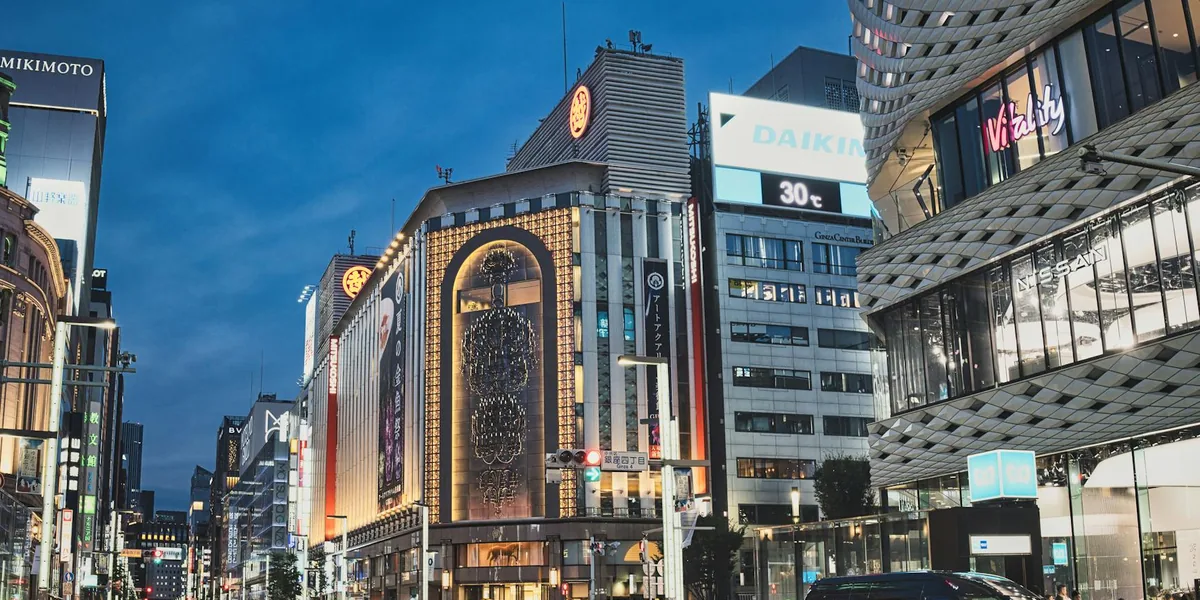
Ginza is Tokyo's most prestigious shopping district, home to flagship stores of Chanel, Hermès, and Uniqlo, alongside century-old department stores like Mitsukoshi and Wako. The 15 km route from Haneda Airport cuts through Tokyo Bay's reclaimed land before entering the glittering heart of central Tokyo. While multiple transport options exist, the direct convenience of a taxi or pre-booked transfer makes sense when arriving with luggage destined for Ginza's luxury hotels.
| Option | Price (est.) | What's included |
|---|---|---|
| Pre-booked transfer | $45-65 | Fixed all-in price · meet & greet · flight tracking · ALL surcharges and tolls included · free cancellation |
| Metered taxi | $25-40 on the meter | Meter only. Airport surcharge, tolls, any night surcharge and a tip come on top, and the total varies with traffic. |
| Ride-hailing app | N/A | Upfront pricing - pickup may require walking to a designated zone, surge during busy times |
Note: All three figures are our own estimates, gathered when this page was written, and are shown for orientation only. They are not quotes and they are not live prices. The metered figure is what the meter shows, before airport surcharges, tolls and tip. Use the search box above for the actual price on your date.
Official airport taxis charge ¥3,000-5,000 ($25-40) using the meter, departing from clearly marked ranks outside both terminals. The Keikyu Line offers the cheapest option at ¥410 ($3.50) to Higashi-Ginza Station in 25 minutes, though navigating stairs with luggage can be challenging. Tokyo Monorail to Hamamatsucho plus Yamanote Line costs ¥670 ($5.50) total but requires a transfer. Pre-booked private transfers run ¥5,500-8,000 ($45-65) with English-speaking drivers and flight monitoring. Airport limousine buses to major Ginza hotels cost ¥930 ($8) but run only every 30-60 minutes.
Taxis and transfers make most sense for late arrivals after 11pm when train frequency drops, groups of three or more where per-person train costs add up, or when staying at hotels not directly on subway lines. For solo budget travelers arriving during daytime, the Keikyu Line is significantly cheaper and often faster during rush hour traffic. The train also beats taxis during evening peak hours (5-8pm) when highway congestion can double journey times.
Japan Taxi (JapanTaxi app) and GO are the dominant ride-hailing apps, both accepting credit cards and offering English interfaces. DiDi operates but with limited availability at Haneda. Note that ride apps cannot pick up from the terminal itself-they collect from designated rideshare zones. International apps like Uber and Grab don't operate standard rides in Tokyo.
Pre-booked transfers include flight tracking - the driver waits regardless of how long the delay is, at no extra cost. Metered taxis are always available at Tokyo (HND) but queues can be long during peak arrival times, and counters may close for late-night flights.
There are three price levels, all of them our own estimates: a ride-hailing app at roughly N/A, a metered taxi at about $25-40 on the meter with surcharges, tolls and tip still to be added, and a pre-booked transfer at around $45-65, which is the only one of the three where the figure you see is the figure you pay.
The 15 km drive takes 20-40 min in normal conditions. Traffic in Tokyo during rush hour can add 20-30 minutes. Pre-booked transfers track your flight automatically, so a delayed arrival does not affect pickup.
On pure price, a ride-hailing app wins at around N/A - though you may need to walk to a designated pickup zone. Japan Taxi (JapanTaxi app) and GO are the dominant ride-hailing apps, both accepting credit cards and offering English interfaces. DiDi operates but with limited availability at Haneda. Note that ride apps cannot pick up from the terminal itself-they collect from designated rideshare zones. International apps like Uber and Grab don't operate standard rides in Tokyo. Weigh that against a pre-booked transfer at $45-65: slightly more, but with a driver waiting at arrivals and nothing added on top.
Pre-booking is safer because the price is fixed in advance, your driver waits at arrivals with a name sign, and there is a record of the booking. Airport taxi counters at Tokyo (HND) are legitimate but typically charge more than the running meter. Unlicensed drivers approaching arriving passengers inside the terminal should always be avoided.
Pre-booked transfer drivers are typically vetted for basic English. Metered taxi drivers' English varies - at major airports it is usually basic but functional. Have your destination written in the local script or share a Google Maps pin to avoid misunderstandings, especially for hotels on small lanes.
See our full Tokyo Haneda International Airport transfer guide for all destinations, local taxi tips, FAQ and booking options. Or browse Tokyo airport transfers covering all city neighborhoods. For nationwide context, see our Japan transfer guide.